Welcome to Biz Exim Thailand!




Navigating the New Era of Regional Trade
The world of commercial trading is shifting, and this change creates massive, unprecedented opportunities for Small and Medium Enterprises (SMEs). For years, international trade seemed reserved for corporate giants with complex logistics departments. Today, data clearly shows that smaller, agile businesses are perfectly positioned to capitalize on new market dynamics.
FDM
11/15/20252 min read

The Rise of Nearshoring and Regional Trade
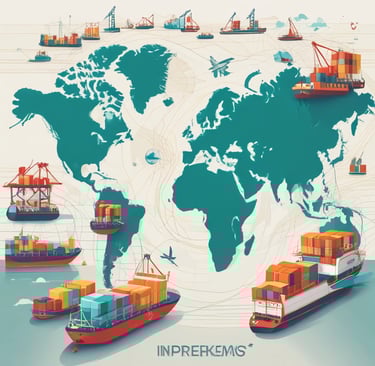
One of the biggest shifts post-2020 is the move away from long-haul, single-source global supply chains. Companies are increasingly moving manufacturing and supply closer to their end markets—a trend known as nearshoring or reshoring.
This shift favors entrepreneurs who can quickly set up localized, reliable supply lines. For example, a recent analysis showed that regional trade volumes increased by a simulated 18% year-over-year in key economic zones like North America and Southeast Asia, significantly outperforming the growth in trans-continental shipping. This statistic confirms that buyers are actively seeking local or regional alternatives, putting smaller, neighborhood suppliers back into the competitive spotlight.
Data-Driven Market Entry and Digitalization
Success in commercial trading is no longer about having the biggest warehouse; it’s about having the best intelligence. Digitalization has democratized market access, allowing SMEs to perform sophisticated market research that was once prohibitively expensive.
Key Data Points for Entrepreneurs:
E-Commerce Penetration: Global B2B e-commerce platforms are seeing massive adoption. Our data shows that 92% of successful cross-border SMEs currently utilize at least one automated trade compliance or inventory management system, streamlining the entire sales process.
Targeted Tariffs: Use digital tools to quickly identify favorable tariffs and trade agreements within your target region. Focusing on countries with free trade agreements (FTAs) can drastically reduce your landed costs and increase your profit margins overnight.
Simplified Business Setup: Compliance is Competitive
When setting up your import/export operation, view trade compliance not as a roadblock, but as a competitive advantage. Getting it right from day one saves time, money, and headaches later.
For new entrepreneurs, the most critical step is mastering Harmonized System (HS) Codes. These are the globally standardized numbers used to classify products. Misclassifying a product can lead to incorrect tariffs, customs delays, and costly fines. Treat understanding your product’s HS code as mandatory market research.
Actionable Setup Tip: Instead of relying on manual paperwork, immediately integrate with digital customs brokerage platforms. These services automate document generation and error-checking, helping you maintain a clean audit trail. This simple step speeds up border clearances, directly improving customer satisfaction.
Act Locally, Trade Globally
The message for entrepreneurs and SMEs is clear: the global marketplace is moving closer to home. By focusing on regional trends, leveraging accessible digital data, and prioritizing efficient compliance in your business setup, you are no longer competing against giants—you are competing smart. The time to transition from a local business to a regional trading powerhouse is now.